Where Italians Are Actually Moving in 2026: A Family's Guide to Leaving Italy
Italian wages are 7% lower than in 1996. Over 630,000 young Italians emigrated in the last decade. Here's where they're going - and why Panama has a unique advantage for Italian citizens.
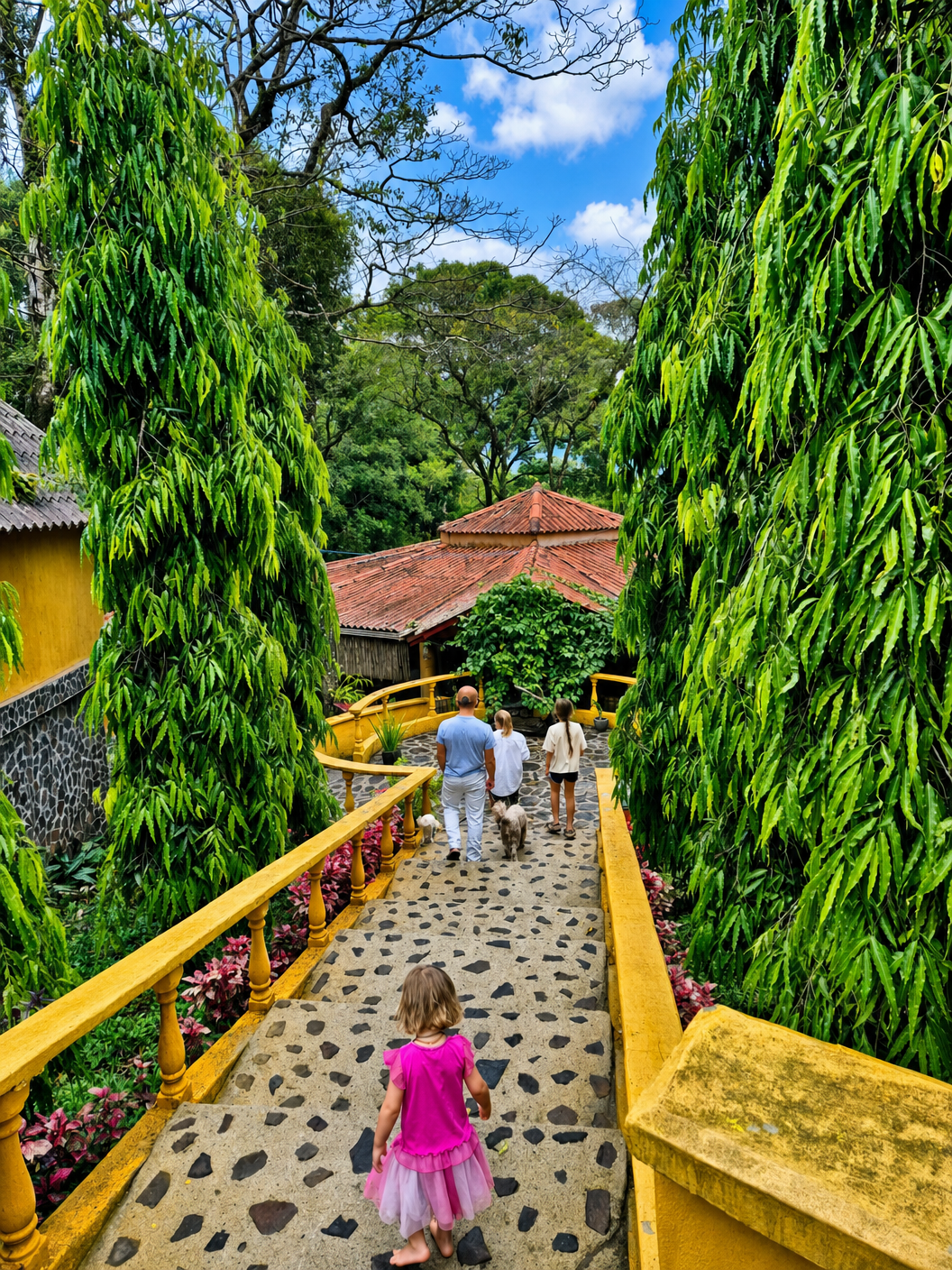
Italian wages are 7% lower than they were in 1996. In the same period, German wages grew 18% and French wages grew 19%. Over 630,000 young Italians aged 18 to 34 emigrated between 2011 and 2024. The door for returning Italians on favourable tax terms is narrowing as the Impatriati regime expires from 2027.
People aren't really leaving their country; they're leaving a system that keeps taking small pieces of them. Every new law that limits choice, every regulation that takes time, every tax that takes income - that's a chip off your life. A chip off the time you wanted with your family. A chip off the experiences you wanted to have. A chip off the freedom you thought adulthood would give you.
We're Australian, with Italian family on Simon's side. We see the same thing happening there - older families extending their houses to take in adult children because the kids can't afford their own homes. We started researching moving from Italy alongside other Western countries to find a different way. Here's what we figured out.
Why So Many Italians Are Moving Abroad in 2026
1. The Wage Stagnation Reality
In 2023, Italian net hourly wages were actually 7% lower than they were in 1996. In the same period, German wages grew 18% and French wages grew 19%. You are working harder just to stand still, while the tax wedge - the gap between what an employer pays and what you take home - sits at around 44%.
2. The Tourism Extraction
Housing affordability is a massive issue, driven largely by over-tourism. When Florence has to pass bylaws to ban short-term rentals in its historic centre, and Venice is charging an entry fee, it's clear the cities are no longer built for the people who actually live and work there.
3. The Youth Exodus
Between 2011 and 2024, 630,000 young Italians aged 18 to 34 emigrated. For every nine young Italians who leave, only one young person from an advanced economy arrives. People are tired of the political back-and-forth and feel a general lack of trust in the system's ability to fix the underlying issues.
4. The EUR-USD Tailwind
Here's something most people don't think about when looking at Italians moving abroad: Panama is a dollarised economy. Everything is priced in USD. And right now, the euro is trading at around $1.18 USD - about 18% stronger than when it hit parity in 2022. That means your euros go further in Panama than they did three years ago. A family spending €5,900 a month in Milan could live a comparable life in Panama City for closer to €3,777 USD equivalent. In Boquete, it's even cheaper.
Quick Comparison: 5 Countries Italians Are Moving To
| Country | Monthly Cost (Family of 4) | Visa for Italian Citizens | Homeschooling | Climate | Best For |
|---|---|---|---|---|---|
| 🇵🇦 Panama | $2,855–$4,148 USD | Italy-Panama Treaty Visa | ✅ Legal | Tropical / Mountain Spring | Tax efficiency & business builders |
| 🇨🇭 Switzerland | $7,232 USD | EU Free Movement | ⚠️ Varies by Canton | Alpine / Temperate | High salaries & proximity |
| 🇪🇸 Spain | $3,047 USD | EU Free Movement | ⚠️ Restricted | Mediterranean | Culture & lifestyle |
| 🇦🇱 Albania | $2,622 USD | Visa-free (up to 1 year) | ✅ Legal | Mediterranean | 0% small business tax |
| 🇦🇪 UAE (Dubai) | $4,054 USD | Employment / Investor | ✅ Legal | Desert | 0% income tax & wealth |
Country Deep Dives for Italians Moving Abroad
🇵🇦 Panama - The Unique Italian Advantage
Panama is rapidly becoming a top choice for expats looking to build businesses and keep more of what they earn. The country operates on a territorial tax system, meaning foreign-sourced income is generally not taxed locally.
The Italy-Panama Treaty: The 1966 Treaty of Friendship, Commerce, and Navigation allows Italian citizens to obtain permanent residency in Panama much faster than other nationalities. You do not have to go through the typical two-year provisional period; you can apply directly for permanent residency. This is a massive advantage that most Italians don't know about.
The Linguistic Head Start: Italian and Spanish share roughly 82% lexical similarity - the highest of any major Romance pair. Italians who arrive in Panama are conversational within months, where English speakers are still ordering coffee with hand signals after a year.
Cost Breakdown: For a family of four, monthly living costs range from $2,855 to $4,148 USD. Renting a 3-bedroom in Panama City averages $1,665–$2,151 USD, and in Boquete, where we live, furnished 3-bedroom houses run $800–$1,600 USD per month.
Honest Downside: Despite the linguistic advantage, Panama's bureaucratic culture is very different from Italy's. Patience is required. Things move on Panama time, and the concept of a firm deadline is flexible.
🇨🇭 Switzerland
Cost Breakdown: Monthly costs for a family of four in Switzerland run around $7,232 USD - the most expensive on this list.
Visa Options: As EU citizens, Italians can live and work in Switzerland under the Agreement on the Free Movement of Persons. The Italian-speaking canton of Ticino is a natural first stop.
Honest Downside: The cost of living is brutal. Rent in Zurich or Geneva for a family-sized apartment can easily exceed $4,000–$5,000 USD per month. The tax savings from leaving Italy are largely absorbed by the higher cost of living.
🇪🇸 Spain
Cost Breakdown: Monthly costs for a family of four run around $3,047 USD in cities like Valencia or Málaga.
Visa Options: As EU citizens, Italians have the right to live and work in Spain under EU free movement rules.
Honest Downside: Homeschooling is heavily restricted in Spain. Most regions require children to be enrolled in a registered school. Spain also has its own tax complications for high earners.
🇦🇱 Albania
Cost Breakdown: Albania is the cheapest option on this list at around $2,622 USD per month for a family of four.
Visa Options: Italian citizens can enter Albania visa-free for up to one year. Long-term residency requires a permit, but the process is relatively straightforward.
Honest Downside: Albania is still developing its infrastructure. Healthcare quality outside Tirana is limited, and the expat community is much smaller than in Panama or Spain.
🇦🇪 UAE (Dubai)
Cost Breakdown: Monthly costs for a family of four in Dubai run around $4,054 USD.
Visa Options: The UAE Golden Visa offers 10-year residency for investors, entrepreneurs, and skilled professionals. The Freelancer Visa is available for remote workers.
Honest Downside: The UAE has a 0% income tax, but the cost of living is high, alcohol is restricted and expensive, and the cultural environment is very different from Italy. Summer temperatures regularly exceed 45°C.
Why We Chose Panama
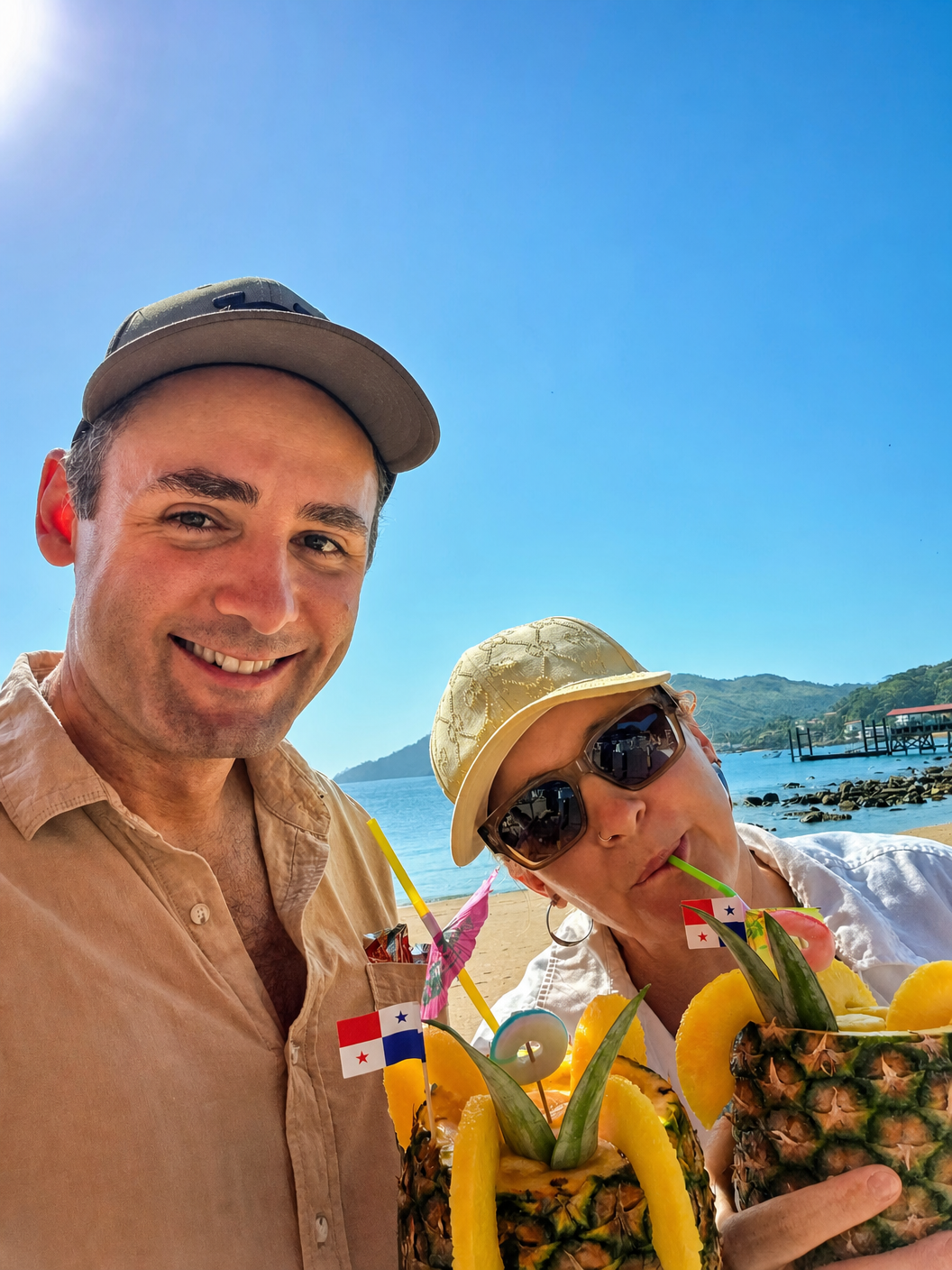
We literally had to Google Panama to work out where it was. It was that country we'd heard mentioned in movies. That was the full extent of our knowledge.
We'd always assumed we'd end up somewhere in Europe. But the more we travelled through it, the more we realised it wasn't the right fit for us. There was a language barrier almost everywhere, and more than that, we just never fully relaxed. Beautiful moments, yes. But nowhere we pulled up and thought, "We could actually build here." Because that's the thing: we're not in retirement phase. We're in build phase. We needed people around us who were on the same path.
We seriously considered Portugal, Thailand, Bali, and Mexico. Each one got ruled out for its own reason. Bali made it nearly impossible to bring our dogs. Portugal has some tax laws that can catch you out badly if you're not careful. Cyprus had the energy of a country that didn't quite know what it wanted to be, and homeschooling is illegal there, which was a dealbreaker for us. Safety was a big factor too - especially with an 18-year-old who wants to stretch his wings.
Panama kept rising to the top. Tax efficiency, a genuine expat community of people who are building things (not just retired and waiting for the sun), and a country that actually welcomes homeschooling families.
The moment that confirmed it was Boquete. I'd been dreaming of a town with energy but still that country feeling: coffee plantations, little cafes, and the kids walking down to a freshwater stream and just sitting on the edge. That was it. That was the moment for our whole family.
What We Got Wrong
We made the decision to not go back to Australia while we were already overseas in Italy. Which sounds great in theory. In practice, it meant we were trying to sell a house, sort our self-managed super fund, relocate a shipping container, and figure out our dogs' paperwork. All from the other side of the world.
The single biggest thing we'd do differently: fix everything in your home country while you can still walk into a bank or a solicitor's office in person. Panama visa documents must be no older than six months. We did not know this. We hit Panama on our feet and went, "What's next now?" - and there was a lot of "next."
We're still tidying up loose ends in Australia to this day. That's the whole reason Pathway to Panama exists: so you don't have to reverse-engineer it like we did.
What Surprised Us Most
Honestly, I'm not sure I would have believed this before we left. We'd travelled to Bali, Fiji, all over Australia, but we'd never actually lived somewhere permanently in a new country. Visas, cars, setting up a life from scratch.
What surprised us most was how much less red tape there was. We came from Australia expecting friction everywhere. Instead, our biggest stresses were still coming from Australia - not from Panama. Someone should have told us: "I know how Australia is, but when you cross that border, it's a different experience." We're not very good at small talk. Ask us about goals, dreams, or travel and we'll talk all day - but we'll also talk about bureaucracy, and Panama wins that comparison easily.
Ready to Explore Panama Deeper?
If you're that person that wants to create multiple sources of income, that wants to live a life of choice, and you're not scared of doing the work and recalibrating how you think, we built something for you.
Or, if you're on Instagram, comment PATHWAY on our latest post and we'll send the link straight to your DMs.
But what about Italy's own tax incentives?
If you've been researching a move to Italy, you've probably seen the headlines about their tax breaks. They sound incredible on paper, and to be fair, Italy is a beautiful country with some real options for expats. But when you look closely at the fine print, the reality is often more complicated than the marketing suggests.
Here is a plain English breakdown of the three main Italian tax incentives you'll hear about:
The Impatriati Regime
This is the famous tax break for foreigners and returning Italians moving to Italy. Under the updated rules (Decree 209/2023, which took effect in 2024), eligible workers get a 50% reduction on their Italian income tax for five years [1]. If you move with a minor child, that exemption can increase to 60% [2]. However, the 2024 reform tightened the rules significantly: the maximum eligible income is now capped at €600k ($645k USD) per year, and you must commit to maintaining Italian residency for at least four years [1]. If you leave early, you lose the benefits.
The 7% Flat Tax for Retirees
If you have a foreign pension, Italy offers a 7% flat tax on all foreign-sourced income [3]. The catch? You have to move to a small town in specific southern regions (like Sicily, Calabria, Sardinia, Abruzzo, Molise, Campania, Puglia, or Basilicata) [4]. Originally limited to towns under 20,000 people, a 2026 update expanded this to towns up to 30,000 residents [5]. This regime lasts for up to nine years [3].
The €200k Flat Tax for High-Net-Worth Individuals
For high-net-worth individuals, Italy offers a substitute flat tax on all foreign-sourced income (Article 24-bis). Under the 2024 budget law, this amount was doubled from €100k to €200k ($215k USD) per year [6]. It's a powerful tool for the ultra-wealthy, but it comes with a hefty annual price tag.
Why Panama still wins for our family
Yes, these Italian incentives exist, and they work well for some people. But here is why Panama still wins for our family. First, Panama's tax incentives are lifetime, not limited to 5 or 9 years. Second, Italy's bureaucracy and language barrier are real and not optional - you will be dealing with the Agenzia delle Entrate in Italian. Third, homeschooling is highly restricted in Italy, which was a dealbreaker for us. Fourth, the Italian regimes have specific income and residency requirements that lock you into local tax filing forever. Finally, Panama operates on a territorial tax system. Foreign income simply isn't taxed at all. There is no incentive to "expire" and no €200k annual fee to pay.
That being said, if your heart is set on Europe, there is a back door that gives you the best of both worlds.
References
[1] Italian Inbound Tax Regime: Complete Guide
[2] Italy - Inpatriate Tax Regime: One Year After Amendments
[3] Italy - Individual - Taxes on personal income
[4] Pay Only 7% Tax in Italy? Here's How (and Where) It Works
Thinking about a Panama business structure?
Panama's 16+ tax-free zones let companies pay zero income tax on foreign earnings - legally. Download our free guide to understand exactly how they work, what the setup process looks like, and whether it's right for you.
Get The Wealth Builder's Guide - Free →Frequently Asked Questions
What is the Italy-Panama Treaty Visa?
The 1966 Treaty of Friendship, Commerce, and Navigation allows Italian citizens to obtain permanent residency in Panama much faster than other nationalities. You do not have to go through the typical two-year provisional period; you can apply directly for permanent residency.
Can Italian citizens legally homeschool in Panama?
Yes. In 2021, Panama passed a law officially recognising homeschooling as a legal exemption to compulsory school attendance. You must notify the Ministry of Education and complete annual assessments.
Does Italy allow dual citizenship if I naturalise in Panama?
Yes. Since 1992, Italian law (Law No. 91/1992) expressly allows dual citizenship. You do not automatically lose your Italian citizenship if you acquire Panamanian citizenship. However, Panama's constitution technically requires an oath of renunciation, though in practice this is rarely enforced by the home country unless you formally renounce it with the Italian embassy.
Are there Italian schools in Panama?
Yes. The Scuola Italiana Enrico Fermi in Panama City offers an educational model inspired by the Italian system, with classes in Italian, Spanish, and English. There are also several excellent bilingual and trilingual international schools.