
Pathway Unlocked - the USA to Panama
Last updated: 4 November 2026
Moving to Panama from the USA (2026): A Family's Guide
If you are considering a move from the USA to Panama, you probably want straight answers about dollars, residency, healthcare, tax reporting and the practical work of getting a family across borders. We live in Panama as an Australian family. We did not move here from the USA, so we separate our own experience from what American friends and members have taught us.
Why people from the USA choose Panama
The first practical attraction for many Americans is the currency. Everyday prices in Panama are normally shown in US dollars, so an American family does not have to translate rent, groceries or school fees into another currency before making a decision. That does not make the move cheap. It makes the numbers easier to see. We still keep a monthly spreadsheet because imported food, private healthcare, school costs and rent can add up quickly.
Distance matters too. Panama City is connected to the United States by regular flights, and the time difference is manageable for work and family calls. American members often tell us that being able to visit home without a two-day journey changes the emotional side of moving. Panama also offers several different climates and lifestyles. You can choose city services, cooler mountain air or Pacific beach living without leaving the country.
We also hear the same warning from Americans who have been here longer than us: Panama is not a copy of the USA with palm trees. Service can be slower, paperwork can feel less predictable and Spanish helps. The reward is not that every task is easy. It is that you can build a different daily rhythm if you are willing to learn how the place actually works.
Our own reason for staying is practical. We wanted more control over how our family spends its time. Panama has given us a base where we can work, educate our children, meet people from many countries and still get outside. That is our story, not a promise that Panama will feel right for every person from the USA.
Which visas you may qualify for from the USA
Americans are commonly interested in the Friendly Nations route, Pensionado, investment residence and temporary remote-work options. The right answer is not based on nationality alone. It is based on your income, family, documents and plans. The thresholds, fees and document rules below are planning guidance. Panama immigration requirements can change and your facts matter. Start with the Panama residency options overview, then confirm the route with a qualified Panamanian immigration professional.
Friendly Nations residence
The United States is treated as an eligible nationality for this family of routes, but the qualifying economic tie, investment amount, provisional period and permanent-residence process must be confirmed . Do not rely on older pages that describe it as automatic permanent residency.
Pensionado residence
Panama's current checklist describes a lifetime pension of at least B/.1,000 monthly, plus B/.250 per dependent, with a property-linked exception at B/.750 . Social Security may be relevant, but the pension must meet the current definition and evidence rules .
Remote-worker or economic-solvency options
A temporary remote-worker category and economic-solvency routes may suit some Americans . Income, investment, insurance, duration, work rights and renewal rules must all be checked against the current official filing checklist.
Do not choose a visa because a social post calls it easy. Ask which documents must be apostilled, how recent they must be, whether dependants are included, whether work is allowed and what happens if your income changes. We built our own move around documents first. That saved us from having to solve avoidable problems after arriving.
A simple next step
Want the full plan?
The $27 Pathway to Panama guide puts visas, cost planning, banking, healthcare, schooling, pets and the move checklist in one place.
See the $27 Pathway to Panama guideTax when you leave the USA
Moving to Panama does not by itself end U.S. tax filing. A U.S. citizen generally continues to report worldwide income to the IRS, and foreign account reporting such as FBAR may apply . The foreign earned income exclusion is not a blanket answer and it does not turn every investment, pension or business question into zero tax.
The bigger U.S. departure-tax conversation is usually connected to renouncing citizenship or ending long-term green-card status, not simply renting an apartment in Panama. That distinction matters. If you are a citizen, green-card holder, business owner, property investor or trust beneficiary, ask a U.S. international tax adviser to explain your exact reporting obligations .
We are careful here because tax is personal. Leaving a country, becoming non-resident, becoming tax resident in Panama and keeping assets or income in the old country are four separate questions. Before you book a one-way flight, get advice in both countries. Keep a written record of your departure date, your home, your family ties, your assets and the work you will do after the move.
Healthcare in Panama compared with the USA
Panama City has private hospitals and specialist care that American members often use for consultations, imaging and planned treatment. One current expat-insurance source gives rough examples of US$30 to US$80 for a doctor visit, US$50 to US$120 for a specialist, US$100 to US$500 for an emergency-room visit and US$300 to US$1,000 per hospital day . These are planning figures, not hospital quotes.
The comparison with the USA is not simply Panama versus Medicare. Medicare generally does not work as ordinary cover in Panama, and U.S. private insurance may not travel with you in the way you expect. Ask about international cover, evacuation, deductibles, exclusions, chronic conditions and whether treatment in the United States is included. We use brokers because reading every policy in another system is hard enough before language enters the picture.
Outside Panama City, facilities and specialist access can be more limited. If you choose Boquete, Coronado or another smaller place, ask where you would go for an emergency and how long transport would take. That question should be answered before you choose the view from your balcony.
Our practical advice is to start with a broker rather than contacting every insurer separately. A broker can compare exclusions, deductibles, hospital networks and language support. Ask whether the policy covers Panama only, emergency evacuation, treatment outside Panama and pre-existing conditions. A low monthly premium is not useful if the policy does not cover the care your family may actually need.
Cost of living compared with the USA in real dollars
For a current Panama City snapshot, one crowdsourced source lists monthly costs excluding rent at about US$855 for one person and US$3,115 for a family of four . It lists a one-bedroom apartment at about US$966 outside the centre and US$1,396 in the centre . These figures are useful for a starting spreadsheet, not a family promise.
A two-bedroom apartment, groceries, utilities, transport, private medical cover and activities can put a couple well above the single-person baseline. A family may spend more than the headline number if it needs three or four bedrooms, schooling, regular flights home or imported products. Our advice is to build three budgets: careful, normal and a month when something goes wrong.
Shipping quotes and deposits are easy to forget. A current mover estimate gives about US$2,056 for a 13 cubic metre consolidated Miami shipment and around US$2,900 for a two-bedroom move, before destination charges and taxes . Ask whether the quote includes packing, insurance, customs, port handling, delivery and storage.
These figures are planning numbers, not promises. Rent changes by district, furniture, school choice, age of children, transport and whether you buy imported food. Use the Panama cost of living guide as a starting point, then build your own monthly budget in US dollars. Panama uses the US dollar for everyday pricing, which made our family budgeting easier.
Shipping belongings and pets from the USA
American movers often compare a small consolidated shipment with a full household container. The correct choice depends on whether you have already tested the neighbourhood and whether your furniture fits the apartments you are considering. Avoid shipping a full house until you have spent ordinary time in Panama. Measure the things you love, price replacement and keep the decision reversible.
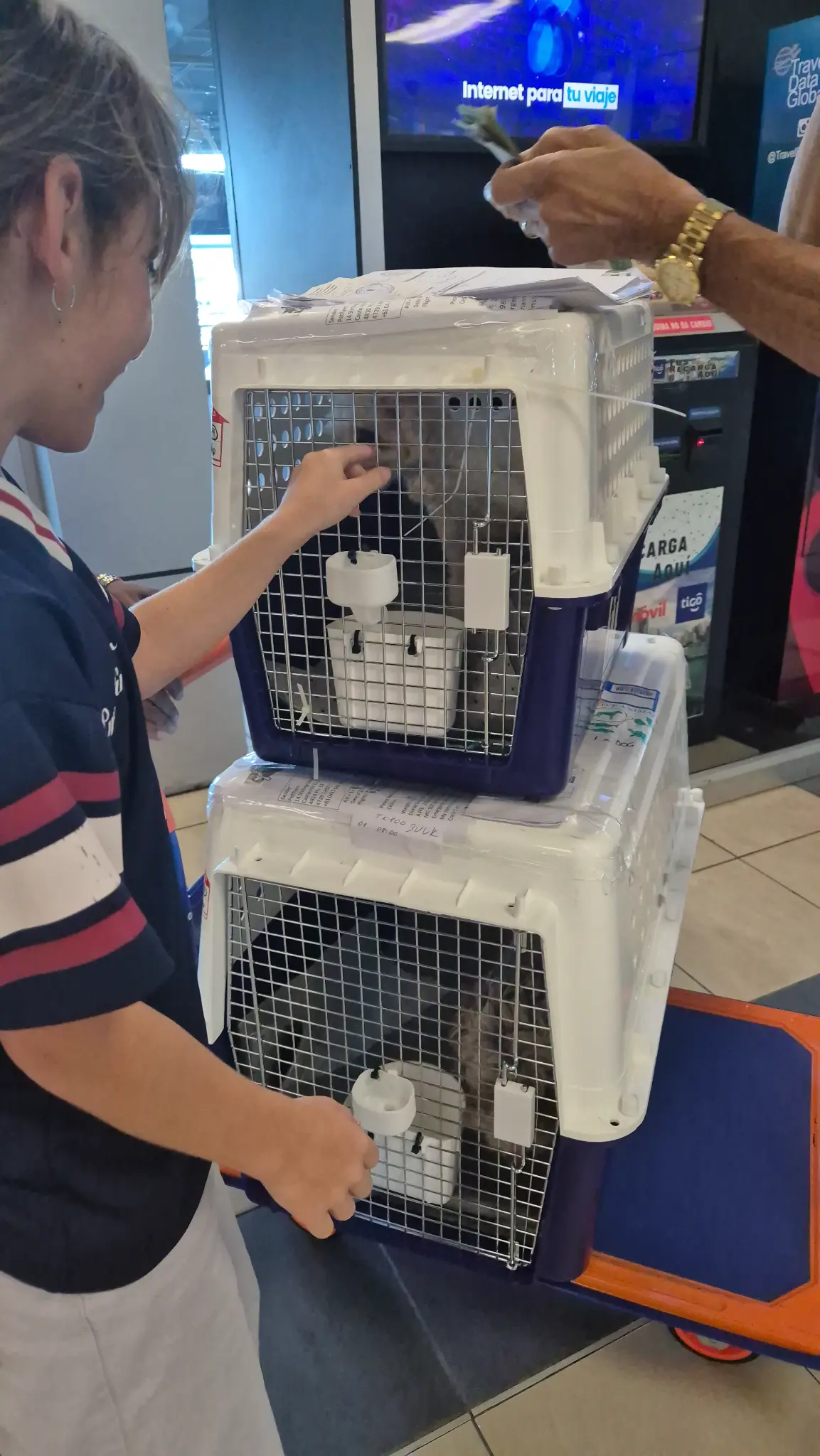
For dogs and cats, Panama's entry process can involve an official health certificate, endorsement or authentication, advance quarantine paperwork and a stated B/.130 home-quarantine fee per animal . American travellers should also check USDA endorsement, airline crate rules, timing and arrival procedures. The airline's answer for your exact flight is the answer that matters.
Keep digital and printed copies of every certificate. Put one person in charge of pet documents and one person in charge of household shipping. On a family move, small ownership gaps create stress at the wrong moment.
With pets, start early. We moved with two dogs and learned that airline rules, health certificates, timing, crate measurements and arrival procedures are not details to leave until the final week. Use the official instructions for your departure country and Panama, then ask the airline to confirm the exact flight-specific requirements in writing. Fees and quarantine rules should be checked for your departure country, airline and travel date.
Flights and time zone
Panama is UTC-5 all year and does not use daylight saving time. Depending on the U.S. city, that can mean the same time, one hour behind or several hours behind. That makes calls and business easier than a move across the Pacific, but it still pays to tell employers and relatives which time zone you mean.
Tocumen International Airport has broad U.S. connectivity, including Copa services and routes from major hubs. Schedules change, so check the airline rather than relying on a search result from last season . Price the full journey, including bags, pet charges, ground transport and a hotel if your family needs a connection.
We recommend arriving with enough time to solve the first practical problems slowly. A rushed arrival makes every apartment, bank and taxi feel like an emergency. A short furnished stay gives you room to learn the city before you buy furniture or sign a lease.
We recommend doing one test trip before the final move if you can. Stay long enough to experience rain, traffic, supermarkets, a medical appointment and an ordinary weekday. A holiday gives you a picture of Panama. A month gives you information.
Where people from the USA live in Panama
Panama City is the most practical first base for many Americans because hospitals, international schools, airports, restaurants, banking and English-speaking services are concentrated there. El Cangrejo, San Francisco, Punta Pacífica, Marbella and Costa del Este each feel different. Visit them at the time you would normally commute, shop and collect children.
Boquete and Volcán offer cooler mountain weather and established international communities. Coronado and other Pacific areas offer beach access and a slower pace. No single area is best for everyone. A person who loves city convenience may feel isolated in a mountain town, while another person may find Panama City exhausting.
American community events and consular visits can be useful for introductions, but community size is not a reason to skip your own test. Ask members what they pay, how far they drive for healthcare and what they wish they had rented before buying.
We live in Panama City, and that shapes what we know best. Panama City gives you private hospitals, international schools, airports, services and a large international community. Boquete and Volcán feel cooler and slower. The Pacific beach towns offer a different rhythm. Visit before signing a long lease. A month-long Airbnb is often a better first step than trying to choose your forever town from a screen.
Our honest take
The American members we know appreciate the dollar, flight connections and the ability to find familiar products. They also mention the paperwork, heat, traffic and the need to manage U.S. obligations from another country. Panama rewards patience more than certainty. The people who settle best seem to expect a learning curve.
Our honest take is that an American move can be very practical, but only when the tax and residency work is done before the emotional announcement. Do not sell everything because a video made Panama look easy. Come for a month, rent, drive, visit a clinic, shop for a week and see how your family sleeps. Then decide.
Panama is not a magic reset. There is humidity, traffic, paperwork, language learning, uneven services and days when you miss the simple familiarity of home. We still think the move has been worth it. The key was accepting that a better life is not a life without friction. It is a life where the friction feels connected to something you chose.
Before you book anything
Before leaving, collect birth certificates, marriage records, police checks, pension or income evidence and financial statements. Ask exactly which documents need apostille, translation and a recent issue date . Keep a simple document tracker with the person, document, issue date, expiry rule, apostille status and scanned copy.
Before you choose a home, list the non-negotiables for each family member. Ours included access to everyday services, space for children and dogs, and a routine we could actually maintain. Yours may include a hospital, school, airport, beach or a quiet room for calls. A clear list removes choices that only create noise.
The free Starter Kit is a good first step. The $27 guide goes further with the route choices, practical categories and move sequence. We built it for people who want one calm place to work through the decisions instead of opening twenty tabs.
Download the free Panama Starter Kit for a simple first checklist. Then read the full Pathway to Panama guide before you make decisions about residency, housing, schools, healthcare, vehicles or pets.
The practical part people leave out
Moving countries is a chain of small jobs. The jobs are not difficult because each one is complicated. They are difficult because they arrive together. A document needs a current date. A rental needs a deposit. A pet needs a certificate inside a narrow window. A school wants records while an insurer wants medical history. Put every job on one page and give each job an owner. If nobody owns the next step, the family ends up discussing it repeatedly without moving it forward.
Build your first Panama month around observation rather than consumption. Visit the supermarket you would use on a normal Tuesday. Test the route to a hospital. Walk the streets in rain and heat. Ask a repair person how appointments work. Sit in a cafe with the children. Notice whether your internet works from the room where you would actually work. These details sound ordinary, but ordinary life is the product you are choosing. A beach view cannot compensate for a daily routine that exhausts everyone.
Keep your first housing choice reversible. We recommend a furnished long-term Airbnb or similar rental for one month, then extending only after you have tested more than one area. In some parts of Panama, three- and four-bedroom homes are harder to find, especially when you want a particular school route, pet policy, budget or level of maintenance. Give yourself time to find the right house and area. A rushed lease creates more decisions, not fewer.
Make a language plan that matches your life. Learn the Spanish words you need for rent, utilities, school, health, documents, repairs and pets. Save the names and addresses of the people who help you. Take a photograph of a useful form when someone explains it. Ask for a written quote. Confirm what is included. This is not about distrusting everyone. It is about making sure that a friendly conversation becomes a clear next step.
Keep an arrival folder that can be opened when you are tired. Put passports, copies, emergency contacts, accommodation details, prescriptions, pet documents, insurance information and the first week's addresses in one place. Put the same documents in a secure digital folder that works without a local SIM card. Share the folder with one trusted person at home. This small step means the family does not have to search through ten bags when a taxi driver, clinic or airline asks for an answer.
We wrote our story so you can see the family behind Pathway Unlocked. We are not presenting ourselves as immigration lawyers, tax advisers or doctors. We are a family that made a large move, keeps asking questions and shares the working notes that would have saved us time. Use this guide to make a shortlist, then confirm the parts that affect your legal status, money, health or family safety with the right professional.
Frequently asked questions
Can citizens of the USA move to Panama?
Citizens of the USA may be able to visit and apply for a Panamanian residence category, but eligibility depends on the person's passport, income, family, work and investment facts. Check the current immigration rules before acting.
What is the main retirement route from the USA?
The Pensionado route is the first one to ask about when you receive a qualifying lifetime pension. The current amount is listed as a lifetime pension of at least B/.1,000 per month, plus B/.250 per dependent , but this should be checked with Panama Immigration and your adviser before filing.
Can I work remotely from Panama?
Some people use a temporary remote-worker route, while others need a residence category connected to work, business or investment. The correct answer depends on where your clients are, where your employer is and how long you plan to stay. Ask for a current written answer.
Will I still pay tax in the USA after leaving?
Possibly. Tax residence, property, pensions, investments, company income and departure rules can all change the answer. American citizens generally keep U.S. worldwide-income reporting responsibilities Get advice before you give up a home or change your banking address.
How much money do I need each month in Panama?
There is no single family number. Panama City rent, schooling, health cover, imported food, transport and the size of your home make the biggest difference. Use the real-dollar examples on this page as a starting budget, not a promise.
How long is the flight from the USA to Panama?
Miami to Panama City can be about 3 hours, while Houston and Atlanta are commonly around 4 hours Exact routes, fares, baggage rules and connections change by airport and season. Check the airline before booking.
Should I ship everything from the USA?
Usually not on your first move. Price a small shipment, storage and replacement locally. Bring the things that are costly or meaningful to replace, and get a written quote that separates freight, insurance, customs, port, delivery and storage.
Where should I live when I first arrive?
We recommend a furnished month-long rental first. Panama City, the highlands and the Pacific coast feel very different. Give yourself time to test ordinary life before committing to a long lease.
Make your Panama plan with fewer unknowns
The $27 Pathway to Panama guide is the complete member resource we wish we had before our family left Australia.
Open the $27 guideThis page is general information, not legal, tax, immigration, medical or financial advice. Thresholds and fees should be checked against current official documents before you act.